
* The optional Model UNESCO Student Coordinator training will be hosted on March 21 – 22 with in-person and zoom participation options.
The trainings develop students’ essential knowledge and skills to perform confidently in MUNESCO Conference, ability to organise MUNESCO clubs and conferences in schools, and lead school teams to prepare and participate in MUNESCO International Conferences.
Training Registration Deadline: March 15
Thematic online webinar: (Tentative dates)
Date: April 10 and 11, 16:00 – 18:00 HKT
时长:四节,每节一小时
费用:免费
平台:线上平台(Zoom)
参与受众:所有对参与本次大会有兴趣的学生
- Section 1: Introduction to UNESCO and the United Nations System, the UN Sustainable Development Goals and Neurotechnology
- Section 2: Latest Progress and Future Directions of UNESCO’s Promotion of Neurotechnology and Ethics
- Section 3: Neurotechnology and Ethics — Hong Kong Case Studies
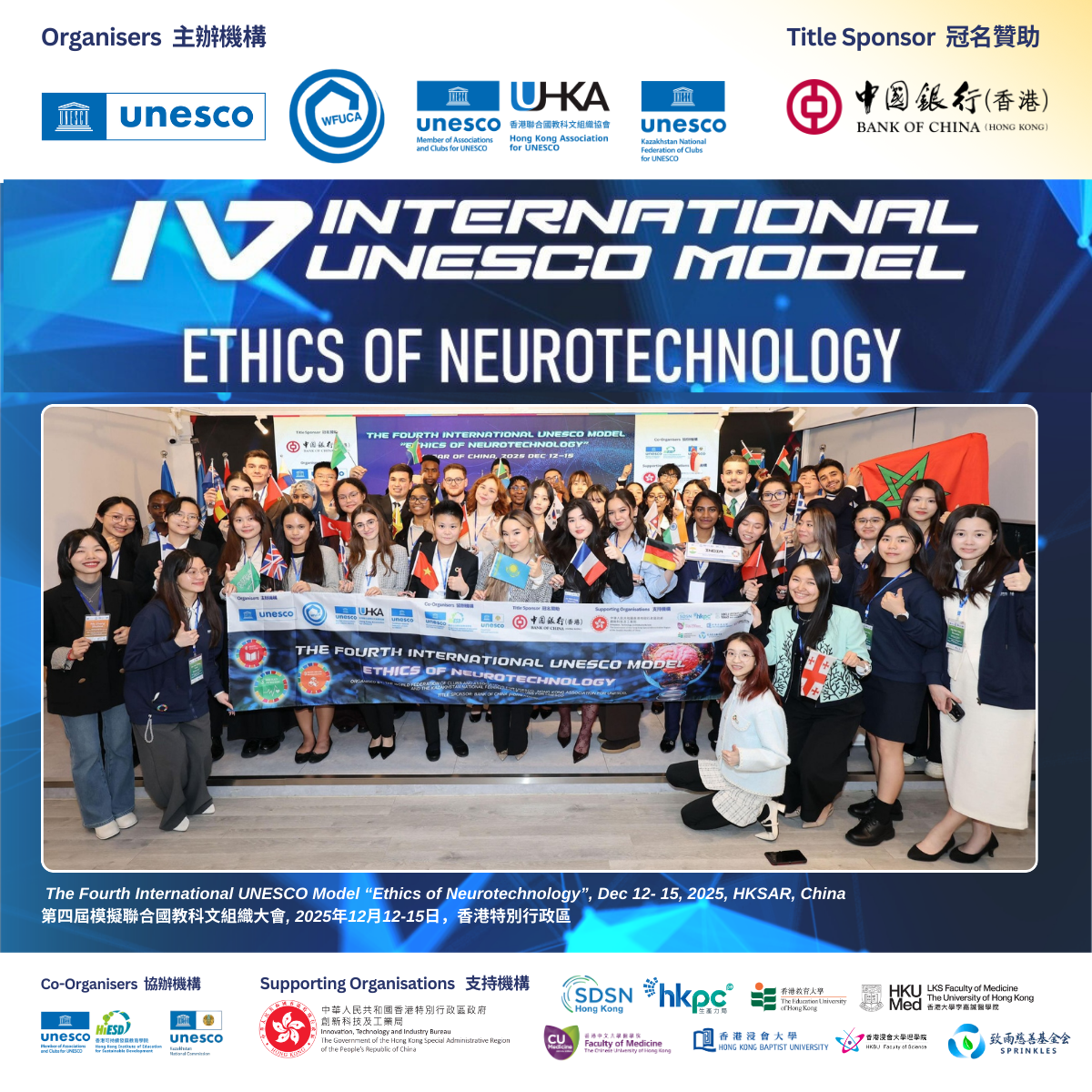
- Section 4: Sharing from Participants of the “Fourth International UNESCO Model” hosted in December 2025
初选包括文字回答及视频提交两部分。
初选链接将於填写本网页上的报名表後发送到您的电子邮件。 请尽早填写报名表,以预留时间准备初选资料。
Submission Deadline: May 11
Part 1: Written Answers (35% of overall score)
Q1. What do you think is the one biggest concern of ethics in neurotechnology applications? (no more than 200 words)
Q2. How is ethics of neurotechnology related to sustainable development? (no more than 200 words)

第二部分:视频(占总分的65%)
每队提交3分钟视频,视频内容包括:
- 30 秒 自我介紹
- 1 分钟 参加大会的动机及对本次活动的期望
– 1.5 minutes: Introducing one specific case study in which application of neurotechnology have faced ethical challenges, and suggest a way to resolve it.

- Delegation Announcement: May 19, 17:30-18:30 HKT
- Presentation Submission Deadline: June 28
- HK-GBA Regional Conference: July 04 (detailed rundown to be released approaching the conference day)
- 12 outstanding teams from the HK-GBA Regional Conference will advance to the International Conference
- Online Briefing: June 9, 17:30-18:30 HKT
- Presentation Submission Deadline: July 14
- 根据初稿得分将选出18支优秀团队参加国际大会
- 主办单位将资助入选队伍在香港境内的住宿、膳食和交通。国际机票和旅游保险由派遣方或学生自行承担。
- International Participants Arrival: July 24
- International Conference: July 25 (detailed rundown to be released approaching the conference day)
- Global Youth Exchange Ceremony: July 25
- Field Trips: July 26 (detailed rundown to be released approaching the field trip day)
- For international participants: The organisers will fund the accommodation (July 24-27, 4 days and 3 nights) , meals (From July 24 dinner to July 27 breakfast), and transfers (arrival and departure between the airport and the designated hotel) of the selected teams within Hong Kong. International airfare and travel insurance are to be covered by the sending party or the students.
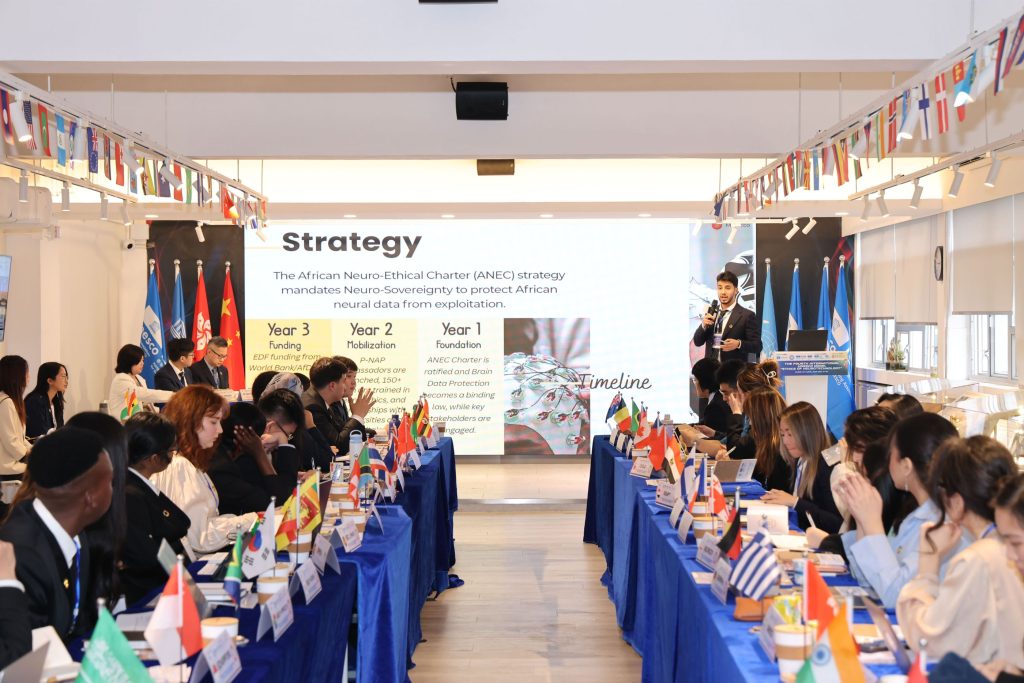
In the strategy presentation, the delegations have to present the strategies that their countries are implementing, or in which they propose to be implemented to promote ethics of neurotechnology in their country. The delegates may focus on existing procedures/programmes/laws etc. or create their own strategies based on research.
一般性辩论和讨论环节由两部分组成:
在有主持的辩论和讨论环节中,每个代表团都有机会提出一项动议。该过程将按字母顺序倒序进行,每三个代表团提出各自的动议,透过投票选出一项议案。名单上接下来的三个代表团将提出他们的动议,并再次在投票后选出一个。
在无主持辩论和讨论环节,代表们可以离开座位自由与其他代表进行面对面交谈。 代表可以成立讨论小组,每个小组可以拟定各自的决议。最后,将队决议中的条款进行表决和整合,形成最终的决议文件。
在本环节,参与者将有机会锻炼慎思明辨、协商和公开演讲技能,与其他代表就本地案例研讨,并就共同解决方案达成共识。
In this conference, the case will be to promote ethical neurotechnology application in the Greater Bay Area.
Based on the discussions throughout the conference, delegates will draft and vote for clauses of the “Youth Prospect on Ethics of Neurotechnology (Secondary School)”.
代表们将根据获奖标准投票选出会议奖项,每位代表只能投票一次。
代表队奖项标准
(代表队奖项包括:最佳代表团、优秀代表团、特别嘉许代表团和最佳策略)

个人代表奖项标准

於首届国际模拟联合国教科文组织大会 荣获最佳代表团

全球首届「国际模拟联合国教科文组织」於2022年4月29日至30日线上举办,来自全球各地42个国家的青年代表团齐聚一堂探讨如何推进包容丶平等的教育。 香港代表团 - Americana Chen 陈思桦 与 Reese Wong 黄惟思 两位「香港联合国教科文组织协会绿色公民青年大使」 荣获「最佳代表团奖」,以及「最佳提案」丶「案例讨论最佳代表团」三项荣誉。


-1024x576.jpg)